
facilities maintenance services UK: 7 essentials every site needs
What facilities maintenance services UK businesses actually cover
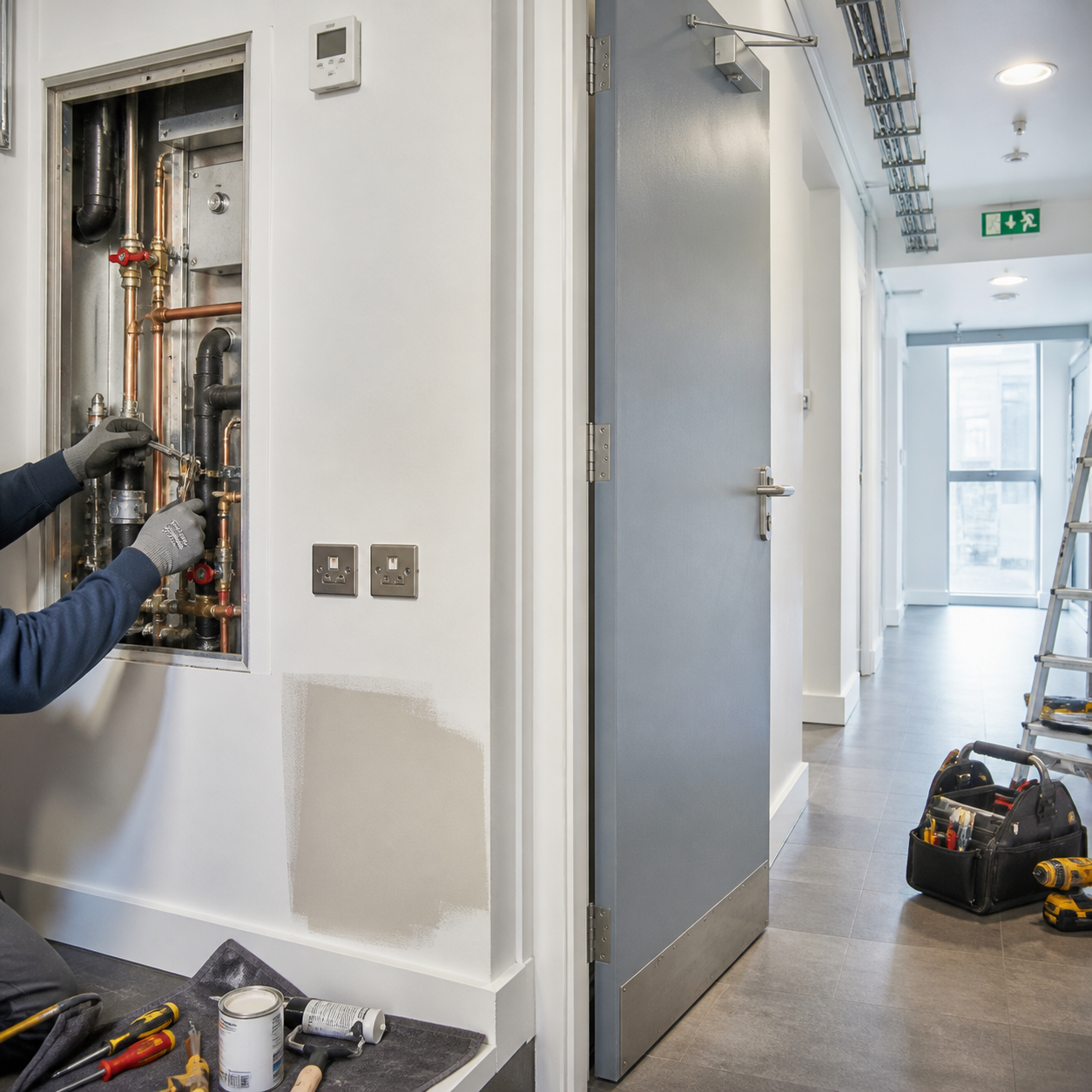
When businesses search for facilities maintenance services UK, they are usually looking for the work that keeps a building safe, usable and presentable every day. In simple terms, facilities maintenance is the ongoing care of the practical things people rely on, from lighting, sockets and plumbing to doors, ceilings, floors and shared areas. It covers the routine jobs that stop a property from slipping into inconvenience, risk or avoidable expense.
That matters because commercial buildings do not fail in one dramatic moment. They wear down in small ways. A leak stains a ceiling. A loose door closer becomes a security issue. Worn sealant lets water into finishes. A flickering light turns into a call about safety, tenant confidence or lost trading time. Good maintenance deals with these issues early, rather than waiting for them to interrupt staff, customers or occupiers.
Facilities maintenance also sits slightly below facilities management. Facilities management is the wider job of planning, budgeting, contractor oversight and workplace coordination. Maintenance is the hands on delivery within that picture, planned inspections, reactive repairs, emergency call outs, compliance follow up, small works and building fabric upkeep. For landlords and property managers, it is the part people notice immediately when it is done badly.
For that reason, buyers of UK facilities maintenance support are not just purchasing labour. They are buying response, organisation and trust. The right support keeps plumbing working, electrics safe, communal areas tidy and minor defects under control, while giving owners clearer visibility over what needs immediate attention and what can be scheduled sensibly. That discipline also helps managers explain priorities clearly to tenants, staff and directors.
Why facilities maintenance services UK plans beat reactive repairs
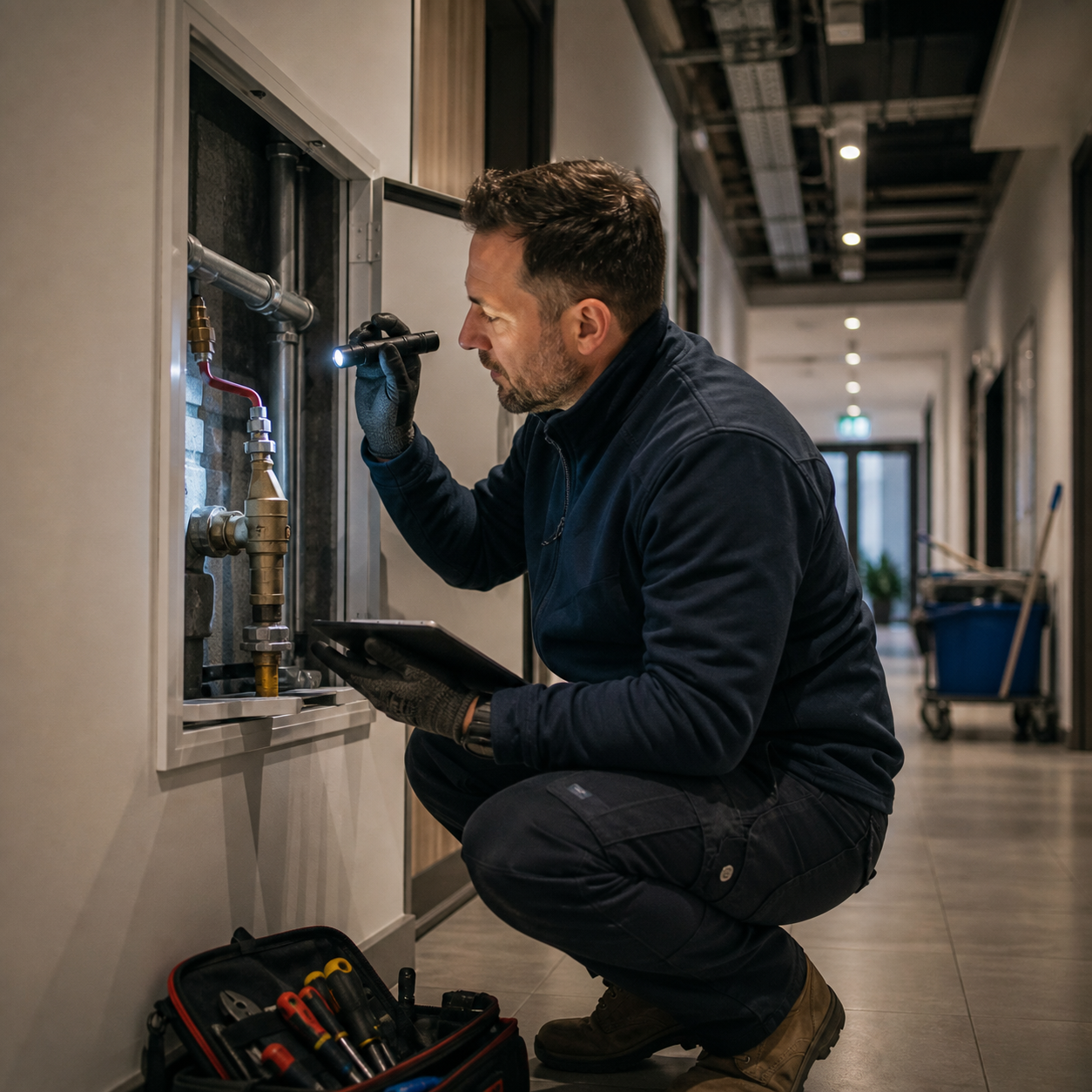
The biggest misconception is that facilities maintenance services UK simply means calling a contractor when something breaks. Reactive repairs will always have a place, because burst pipes, power faults and access issues cannot wait. The problem starts when reactive work becomes the whole strategy. At that point, the building is effectively teaching you what matters by failing in public, often at the worst possible time.
Preventative maintenance changes that pattern. Instead of paying premium rates to solve urgent faults one by one, a business schedules inspections, servicing and minor remedials before they escalate. A small pipe defect can be corrected before it damages ceilings. An electrical issue can be investigated before it trips a floor or forces staff into workarounds. A worn threshold, cracked tile or damaged door closer can be repaired before it becomes a safety incident or tenant complaint.
That approach is consistent with professional guidance. The recent RICS note on planned preventative maintenance describes PPM as systematic inspection and correction that keeps structure, fabric, facilities, plant and equipment in satisfactory condition. In practice, that means building a simple programme around the assets and problem areas that drive the most disruption, then reviewing it before minor defects become major defects.
It also aligns with HSE maintenance guidance, which says employers need maintenance arrangements, necessary inspections and competent people carrying out the work safely. For commercial landlords and business owners, that is not just a paperwork issue. It affects downtime, access, contractor safety and the ability to show that defects were identified, prioritised and dealt with properly.
Reactive only maintenance usually feels cheaper until you add the hidden costs. Emergency call outs disrupt trading. Staff spend time reporting the same problem twice. Occupiers lose confidence in the building. Small repairs are rushed because another urgent issue has arrived. Budgets become harder to forecast because the next failure is unknown. That is why facilities maintenance services UK plans are often less about adding work and more about taking control of what is already happening.
A good plan does not remove emergency repairs. It reduces how often they dominate the week. When routine checks, small works and follow up actions are grouped sensibly, businesses get fewer surprises, steadier costs and less unnecessary disruption across the property.
What a good maintenance partner manages every month

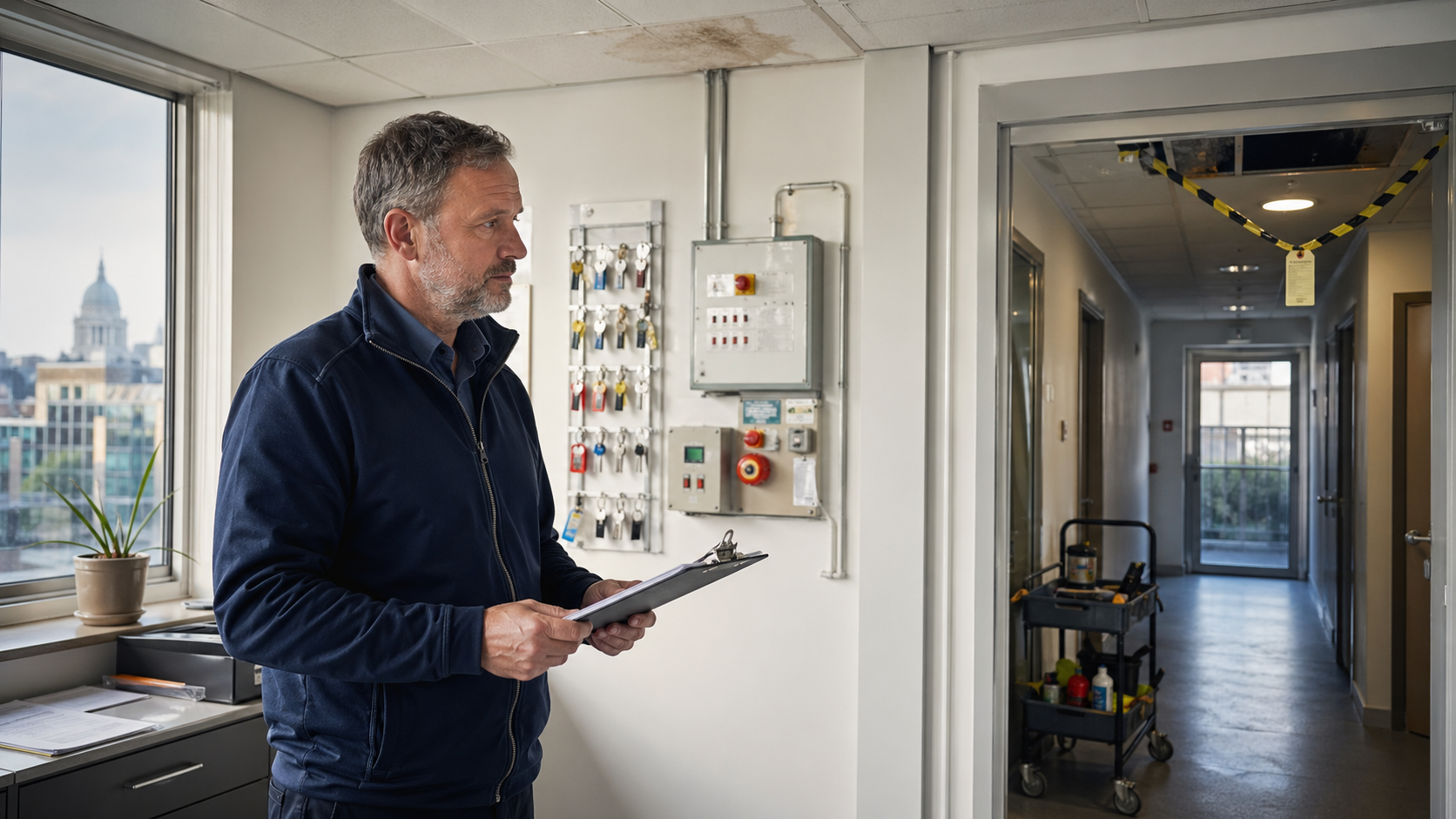
When decision makers compare facilities maintenance services UK providers, the real difference is rarely a single trade. It is the ability to turn scattered faults into an organised flow of work. A reliable partner triages urgent problems, schedules non urgent items, reports clearly and keeps enough visibility on site issues that nothing important disappears into a forgotten email or notebook.
On the ground, that usually means a mix of plumbing, electrics, building fabric maintenance and small works. One month it may be a leaking valve, damaged flooring, loose ironmongery, cracked plaster, stained decoration and lighting faults. The next it may be access issues, toilet repairs, minor refurbishments or remedial work after an inspection. The scope is broad because real buildings create mixed problems, not neat single trade tasks.
Compliance sits alongside the repair list. The GOV.UK guide to renting a business property makes the point clearly, workplace risk assessment, electrical equipment safety, gas safety and asbestos responsibilities need active management, while some communal area duties will depend on the lease. That is one reason records, site awareness, competent trades and clear ownership matter just as much as the repair itself.
Citywide Maintenance Solutions is well placed for that practical role. The team combines plumbing, electrical work, painting, general repairs and emergency response with clear communication and minimal disruption. As Louis Merit of Citywide Maintenance Solutions puts it, “Good maintenance is not about chasing faults all day. It is about keeping the property safe, functional and presentable before minor issues start running the building.”
7 signs it is time to outsource maintenance support

A property does not need to be in crisis before outsourcing makes sense. Many businesses start comparing facilities maintenance services UK options when the same frustrations keep returning, because the internal team has no time to coordinate trades properly or the repair list is slowly turning into lost time, complaints and avoidable risk.
Those warning signs usually mean the property needs a single reporting route, a clearer priority system and someone accountable for both urgent and routine work. Outsourcing is often less about replacing people and more about giving the building a dependable operating rhythm.
- The same leaks, lighting faults or access problems keep returning after short term fixes.
- Emergency call outs are becoming more common than planned visits, especially outside normal hours.
- Small works keep slipping because urgent defects always jump to the top of the list.
- Certificates, remedials and inspection notes are scattered across inboxes, folders and contractor messages.
- Tenants or staff spot presentation issues before managers do, which chips away at confidence.
- One repair often uncovers three more because the original defect was left too long.
- Too much management time is being spent sourcing, briefing and chasing separate trades.
At that point, an outsourced partner can bring structure back quickly. Citywide Maintenance Solutions helps London landlords, property managers and businesses combine responsive repairs with planned upkeep, so buildings stay safe, functional and presentable without unnecessary interruption. If you want a clearer plan for your site, contact Citywide Maintenance Solutions to talk through the backlog, the risks and the next sensible priorities.